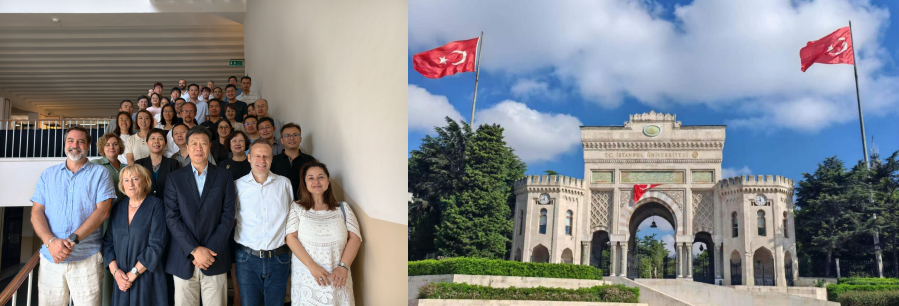
The “ANSO-ATES International Symposium on Silk Road Civilization and Environmental Change” was successfully held on 15-16 August 2026 at Istanbul University, Türkiye. This event was jointly organized by the Alliance of National and International Science Organizations for the Belt and Road Regions (ANSO), the Association for Trans-Eurasian Exchange and Silk Road Civilizations (ATES), the Turkish Geographical Society, the Institute of Tibetan Plateau Research, Chinese Academy of Sciences (ITPCAS), the Center for Excellence in Archaeological Science and Cultural Heritage (EACH) at Lanzhou University, the International Geographical Union (IGU) Commission on Silk Road Civilizations and Environments (SCE), and the UNESCO International Decade of Sciences for Sustainable Development (IDSSD). Over 40 experts from China, Europe, the United States, and countries along the Silk Road gathered in this millennia-old city connecting Europe and Asia to engage in in-depth discussions related to climate change and civilizational evolution along the Silk Road, promoting substantive collaborative research on the ATES platform. More than a dozen early-career scientists from Istanbul University and Istanbul Technical University also attended the symposium.
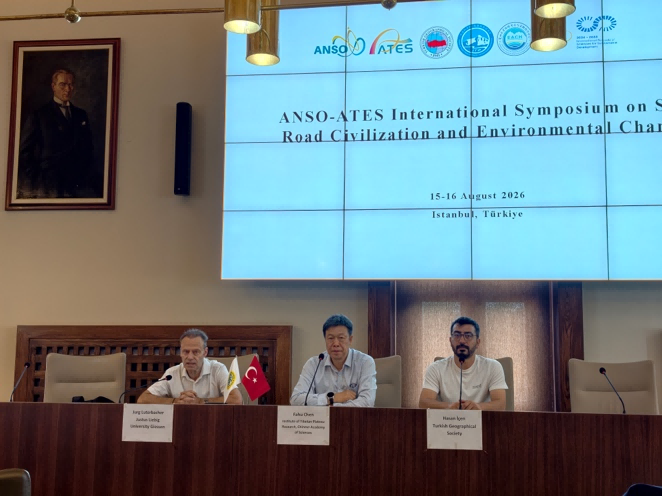
The opening ceremony was moderated by ATES Co-Chair, Prof. Fahu Chen from the Institute of Tibetan Plateau Research, Chinese Academy of Sciences. On behalf of the organizers, he extended a warm welcome to all the participants and noted that this symposium is a key meeting following the release of the "ATES Science Plan 2025-2030" at the 3rd ATES Open Science Conference in Budapest in September 2025, marking an important transition for ATES from scientific planning to program implementation. On behalf of Prof. Barbaros Gönençgil, President of the Turkish Geographical Society, Dr. Hasan İçen delivered the welcome remarks, expressing sincere greetings to the scientists from various countries and briefly introducing the history and major achievements of the Turkish Geographical Society and Istanbul University. ATES Co-Chair, Prof. Jürg Luterbacher of Justus Liebig University Giessen delivered a welcome address on behalf of himself and Prof. Michael Meadows, reviewing ATES’s progress since the Budapest meeting, outlining the goals and prospects of ATES research, and clarifying the symposium's main purpose.
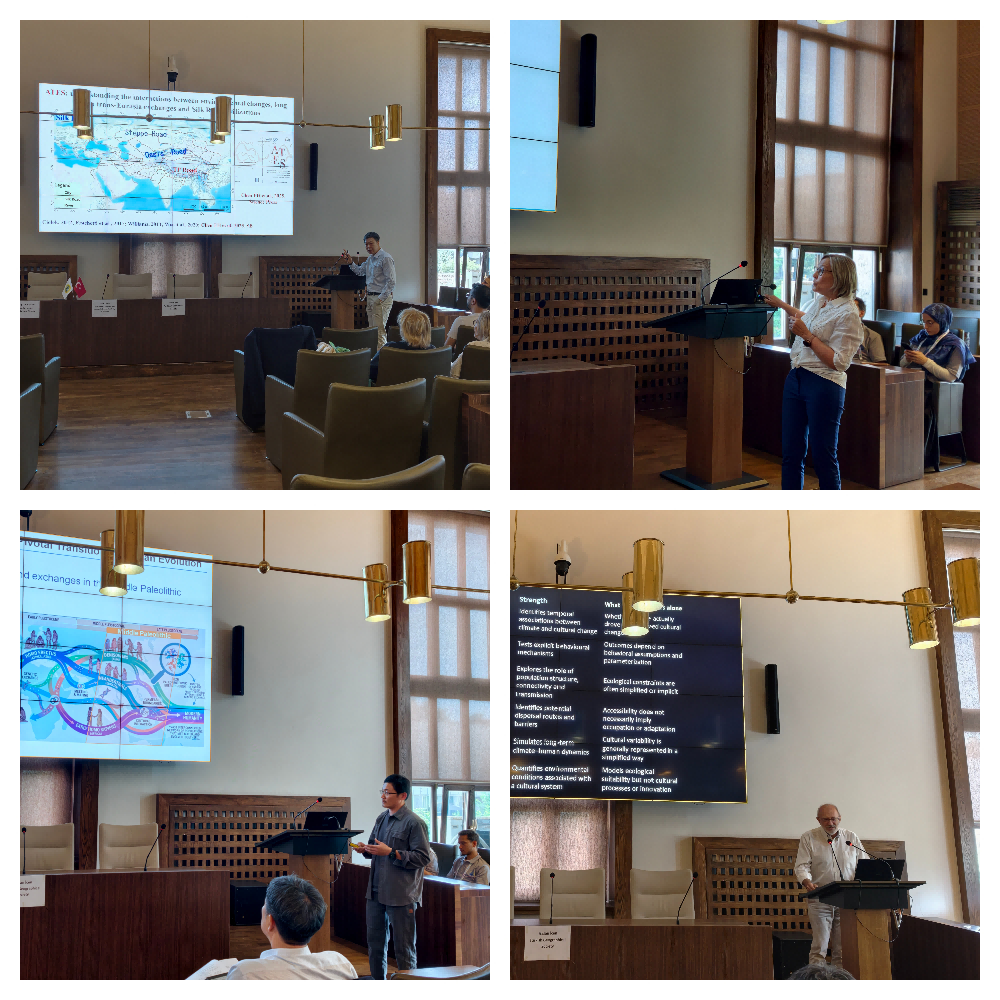
This symposium invited multiple world-renowned experts and focused on four thematic sessions. In Theme I, “Early human migrations, environmental contexts and long-term cultural change”, Prof. Fahu Chen presented the latest research on early human migration to the Tibetan Plateau; Vice President of the International Union for Quaternary Research (INQUA), Prof. Maria Fernanda Sanchez Goñi at the École Pratique des Hautes Études in Paris expounded on the impact of the Mid-Pleistocene transition on Eurasian hominins; Prof. Hao Li from ITPCAS introduced the latest findings on the Chinese Middle Paleolithic and human evolution; Prof. Francesco d'Errico of the University of Bordeaux presented the application of the ecological-cultural niche model in analyzing Paleolithic climate-culture dynamics.
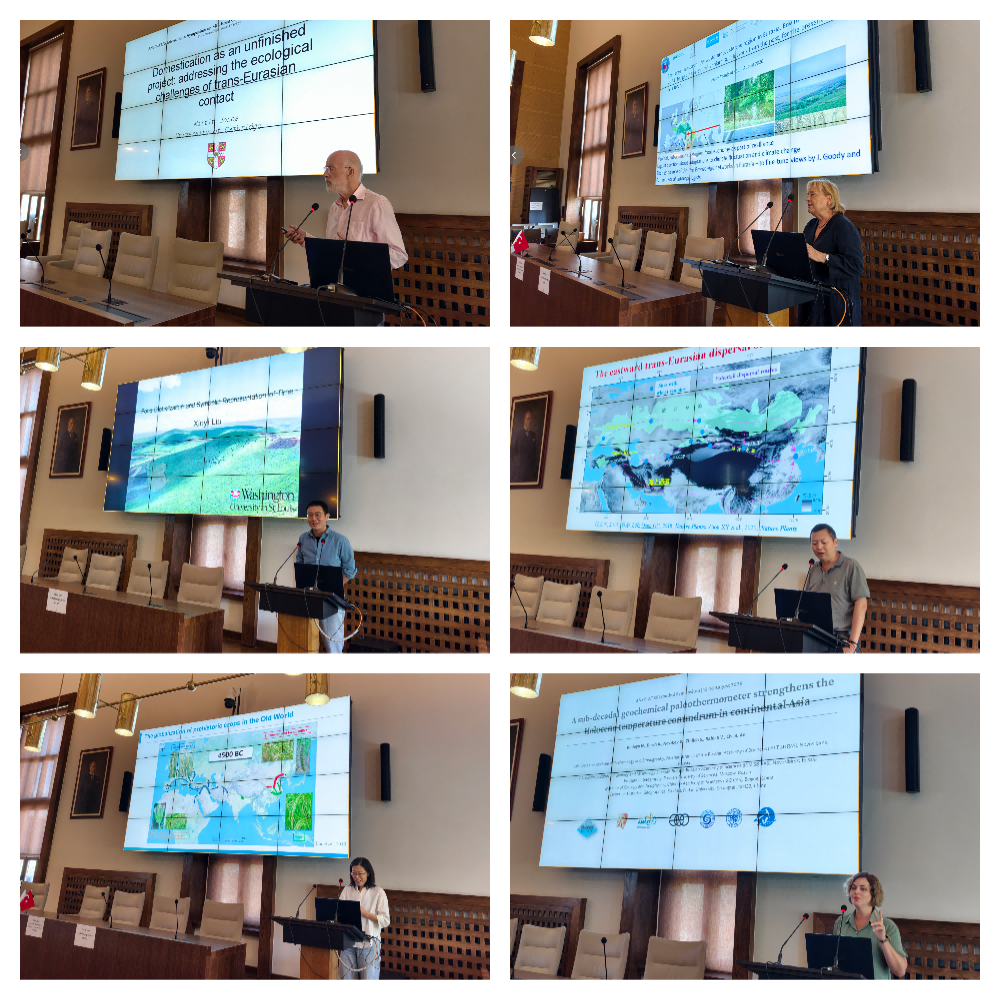
In Theme II, “Food exchange, agricultural transition and Eurasian connectivity”, Prof. Martin Jones of the University of Cambridge explored new challenges in trans-Eurasian ecological research from a domestication perspective; Prof. Eszter Bánffy of the Research Centre for the Humanities at Eötvös Loránd University (RCH-ELTE) presented multidisciplinary research findings on environmental and social changes in the Carpathian Basin around 6000 BCE; Drawing on prehistoric food globalization and nomadic-agricultural interactions, Prof. Xinyi Liu of Washington University in St. Louis explored how changes in subsistence patterns shaped concepts of time; Prof. Guanghui Dong of the Institute of Earth Environment (IEE), Chinese Academy of Sciences (CAS), reviewed patterns and dynamics of prehistoric trans-Eurasian agricultural and pastoral diffusion; Prof. Xiaoyan Yang from Lanzhou University revealed the “third road” of early crop and livestock spread through the Tibetan Plateau; Prof. Natalia Rudaya of the Siberian Branch of the Russian Academy of Sciences presented new evidence of Holocene temperature changes in the Altai Mountains and the latest archaeological discoveries at Karakabak/Aspabota in the Caspian Silk Road.
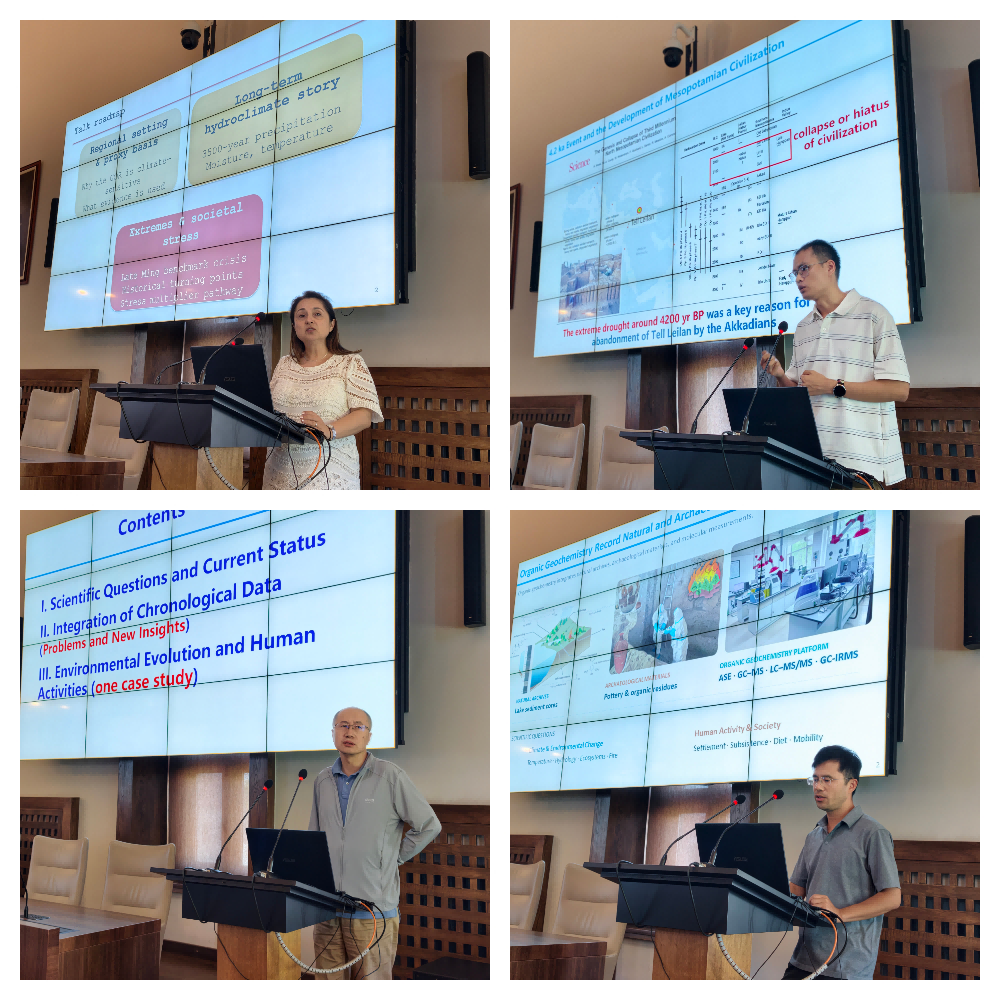
In Theme III, “Climate and Environmental Change, Human Activity, and Social Resilience”, Dr. Elena Xoplaki from the Euro-Mediterranean Center on Climate Change (CMCC) reported on hydrometeorological changes in the Great Ordos Region over the past 3,500 years; Prof. Chen Shengqian from ITPCAS analyzed the spatial heterogeneity of hydroclimatic changes associated with the 4.2 ka event across the Northern Hemisphere; Prof. Hui Zhao from the Northwest Institute of Eco-Environment and Resources (NIEER)/CAS introduced an integrated chronological data study for environmental evolution in arid and semi-arid regions since the Late Pleistocene; Prof. Aifeng Zhou of Lanzhou University demonstrated the application of bio-organic geochemical methods in paleoclimate and Neolithic research.
In Theme IV, “Knowledge, science and cultural exchange across Eurasia”, Prof. Chuan-chao Wang of Fudan University (online) showed the population mobility and migration in the eastern Eurasian crossroads from a paleogenomic perspective; Prof. Xiaohong Zhang explored ethnic migration and cultural exchange along the Silk Road during historical periods; Prof. Chengbang An expounded on how official and unofficial Silk Road routes shaped East-West exchanges from 200 BCE to 1500 CE; Dr. Sun Tao, through examining historical literature, analyzed the evolution of ancient Chinese geographical knowledge through “mythology-travel records-field surveys-state archives”.
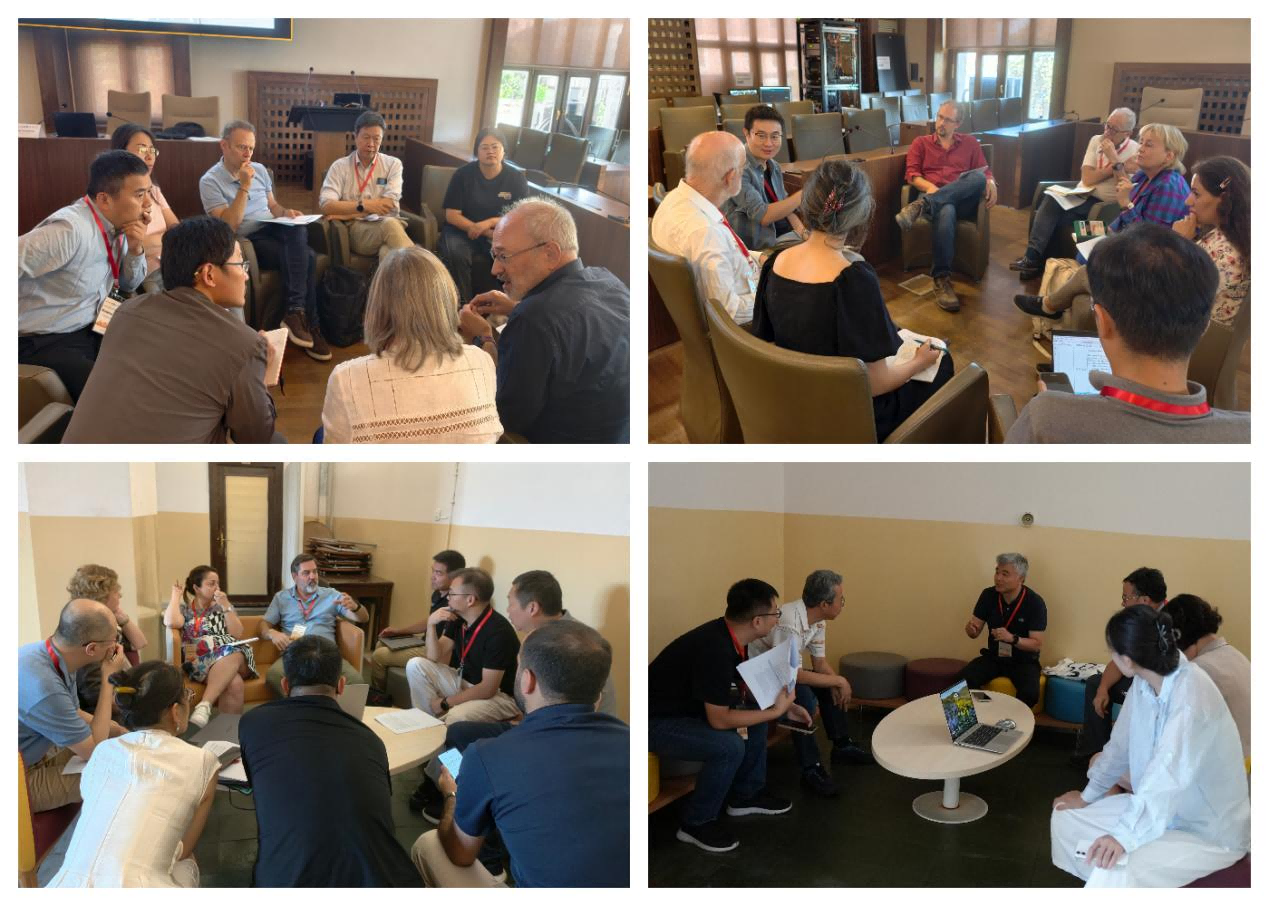
On the second day of the symposium, experts engaged in plenary and breakout-group discussions to evaluate research topics with strong scientific potential and explore pathways for developing future ATES collaborative projects. Based on a systematic assessment of scientific significance, cross-working-group integration potential, feasibility, and research maturity, the ATES experts identified three priority topics, confirmed a roadmap for subsequent project development, and agreed on a preliminary work plan for 2027-2028.
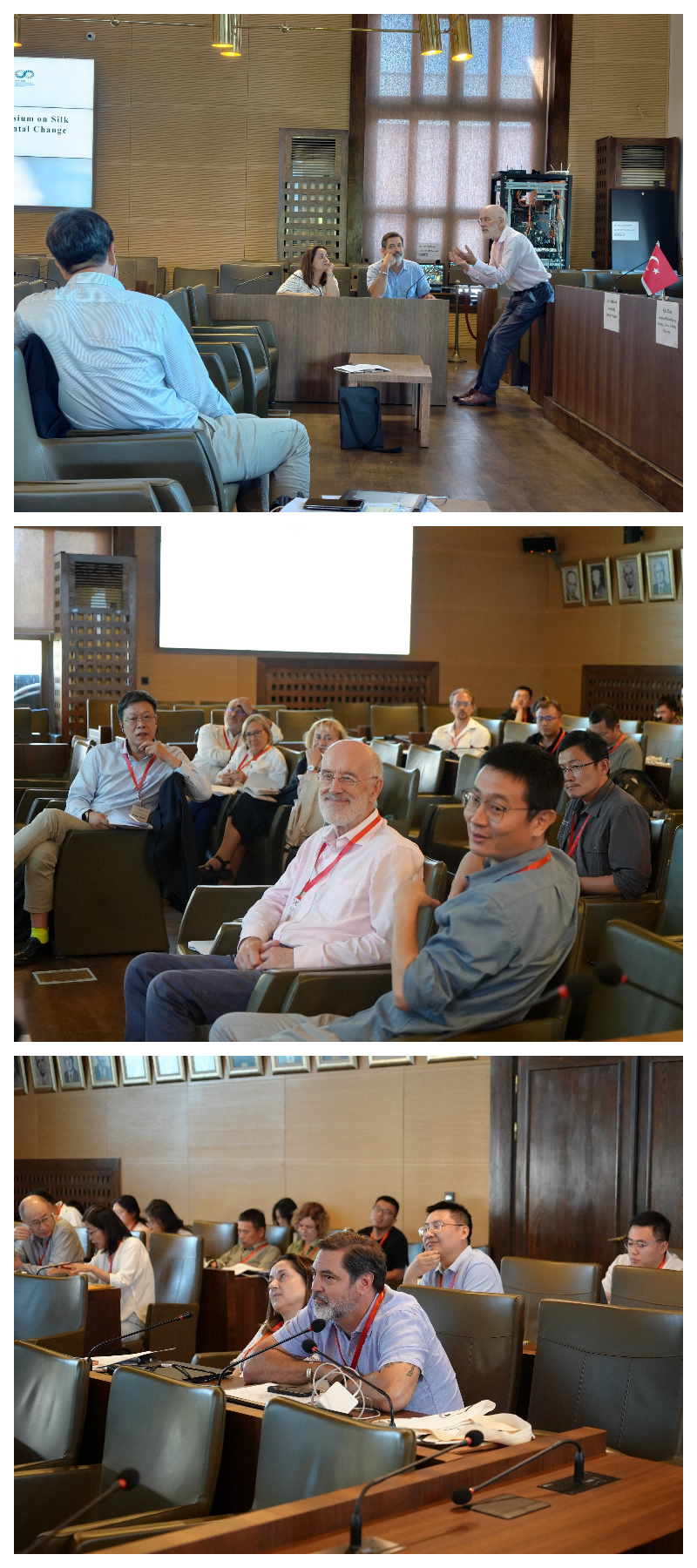
This international symposium marks ATES’s transition from scientific planning to substantive implementation. It establishes a strong foundation for deepening the joint research on human-environment interactions, strengthening international scientific cooperation across Silk Road regions, and advancing the development of a global platform for Silk Road interdisciplinary research.